So far, I have been working on this module for 11 weeks, and will continue to learn about digital business models as well as write new blogs on my own.
Reflection
The discussion with readers under the blog is very important for the analysis of the subject. This is because readers may put forward some unique perspectives that I don’t think about, which is of great help to improve my blog.
More specifically, the comments on my second blog let me know what they more interested in, such as what kind of new skills librarians need to learn, and specific examples of how AI affects librarians in the future. It also helps make my blog more thoughtful and persuasive, such as adding content about future challenges and comparisons with Amazon.
In addition, I find it very helpful to learn from other bloggers, each of whom has researched something slightly different, which can expand my learning scope and come up with a different point of view.
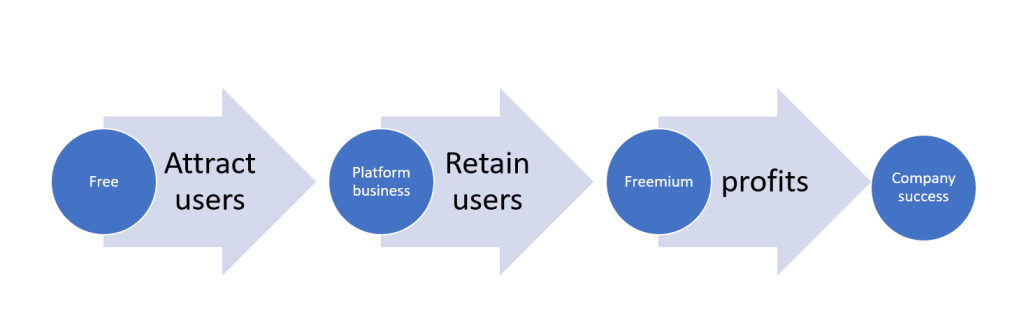
For example, before making comment 1, I have to search and read some references about sharing economy. After that I come up a question about which kind of idle resources can be shared. Emma’s second blog show me how the digital economy affects the role of hotel staff with three type of forms, which give me a better idea related to how to blog in multiple forms. Antish’s third blog let me getting better understanding of digital banking. Finally, I find that there is a different understanding of the way to show the relationship between digital business model and company success when I read the third blog of Emma. I analysed and reconstructed her blog in my own way when I commented on this blog.
What is more, there is another fabulous experience in MOOC community. With access to MOOC for one month, I have taken some courses related to the digital workplace of the future and I also find there are a wider range of courses in different filed, which is help me to learn some interested courses at any time especially related to my major.
Being able to access MOOC and blog form any devices allows me to work better wherever and whenever I am. Online comments make this learning style more attractive. I even think this is more rewarding and engaging than lectures.
In 1999, Ma Yun (also known as Jack Ma) with his 17 friends founded Alibaba based on the technologies of the Internet. In just a few years of its establishment, it has become the world’s largest online and mobile commerce company. Now, the company provides consumer-to-consumer (C2C), business-to-consumer (B2C), and business-to-business (B2B) sales services via web portals, as well as electronic payment services, shopping search engines and cloud computing services (Runqi Yi, n.d.). According to People’s Daily Online the company created over 40 million jobs in 2018 (People’s Daily Online, 2019).
What is Alibaba?
1.2 Digital business model
Constantinou, an adjunct professor at Lund University, claims that digital business models are novel ways to generate demand from new users, new products, new partners and new markets, by practicing techniques first pioneered by Internet companies. But until now there has been no precise definition (Andreas Constantinou, 2020). I think that a digital business model is a form of creating value based on the development of customer benefits using digital technologies.
Geiss describe ten patterns of digital business models: free, freemium, subscription, lock-in, solution provider, rent instead of buy, long tail, user designed, orchestrator and platform business (Michael Geiss, 2018). This study will discuss how digital business model helps Alibaba to succeed from three of them.
2. The way that digital business model affects Alibaba’ s success
2.1 Free pattern
Free pattern entails that a company offers its core product free of charge (Michael Geiss, 2018).
In 1998, China’s trade market was still in the early stage where only information flowed on the Internet. He decided to enter the B2B e-market by providing them with free online services and information according to the different enterprises and the characteristics of the industries (Rashad Yazdanifard, Merveen Tan Hunn Li, 2014).
However, at that time, the cost of Chinese SMEs of doing business with overseas is extremely high due to the special foreign trade environment of China. Up to 2000, this free pattern successfully helped Alibaba owned the users distributed around 185 countries with daily accumulated product posting of 21,976 for buying, 56,823 for selling and 4,387 for cooperation (J. Guo, I. H. Lam, 2006).
In conclusion, free pattern and solution provider pattern help Alibaba attract users to e-trade market that become the core competency and contributing to more business opportunity in Alibaba.
2.2 platform business pattern
Platform business pattern, here, several different user groups are bought together on one platform to interact with each other (Michael Geiss, 2018).
Alibaba is a virtual platform providing services for customers and customers, businesses and customers, businesses and businesses. In fact, almost all digital enterprises, such as eBay, Amazon and Google, has a platform. There is much emphasis put on improving services that caught the users’ concerned issues. This is evident in the competition between eBay and Alibaba in the Chinese market.
In 2003, with China’s credit card system still incomplete, buyers and sellers are concerned about the security of online payments. Instead of eBay using credit card payment systems, Alibaba launched Alipay in 2004 for making them feel security (Peter Williamson, Michelle MichelleWang Jingji, 2014). This credit system has been very much lessens the risk of e-transactions and ease buyers and sellers concern upon failure of delivery or delivery of fake and damaged products.
By the end of 2005 Taobao had become the undisputed leader in C2C e‐commence in China with a 59% market share (up from 8% in 2003). eBay China’s share plunged from 79% to 36% over the same period. Continued losses and lack of progress in the market finally led eBay to shut down its own site in China in 2006 (Runqi Yi, 2020).
In conclusion, a platform based on improving users’ experience promotes the increasing number of loyal customers or long-term users in Alibaba.
2.3 Freemium pattern
For this pattern, a basic version of the product is offered free of charge; users can then subscribe to a premium version with additional functions.
After a big number of log-term users at Alibaba, it began to charge membership fees. Alibaba earn profits by two major aspects. The primary revenue came from advertising fees from Alibaba. The second source of revenue comes from customers for value-added services, listing fees as well as membership fees. Furthermore, Alipay also began to collect technical service charge from business transaction that take place outside of Taobao and Alibaba (You Fei, 2012).
In conclusion, Alibaba can improve the profitability of company in freemium pattern.
3. Summary
In a word, digital business model allows Alibaba to attract users, retain users, and profits. These three competencies are essential to the success of any company.
J. Guo, I. H. Lam, I. Lei, X. Guan, P. H. Iong and M. C. Ieong. (2006). “Alibaba International: Building a Global Electronic Marketplace,” 2006 IEEE International Conference on e-Business Engineering (ICEBE’06).
Peter Williamson, Michelle MichelleWang Jingji. (2014). Alibaba group’s Taobao: from intermediary to ecosystem enabler. London, United Kingdom: University of Cambridge, Judge Business School.
Rashad Yazdanifard, Merveen Tan Hunn Li. (2014). The review of Alibaba’s online business marketing strategies which navigate them to present success. Global Journals Inc. (USA).
In the digital economy,many libraries are in transit from the traditional towards the digital library. The changing role of the library will inevitably lead to changes in the personnel, management, and structure of the library. These changes all reflect changes in the content of library staffs.
traditional vs digital library
Definition
A digital library, digital repository, or digital collection, is an online database of digital objects that can include text, still images, audio, video, or other digital media formats. Objects can consist of digitized content like print or photographs, as well as originally produced digital content like word processor files or social media posts. In addition to storing content, digital libraries provide means for organizing, searching, and retrieving the content contained in the collection.(“Runqi Yi,” n.d., para. 2)
James Michael suggested a blueprint for the library without walls that consisted of five elements (Michael, 1994):
1.interconnectivity – connecting to a network
2.interoperability – the ability of one computer to talk to another
3.integration – of internal and external resources into one single user interface
4.intermediation – reference services, navigational help and instruction provided by librarians
5.interdependency – because one single library cannot own all the resources that might ever be needed by users
Changes in the Role of Librarians
The tools used by librarians in their daily work have changed vastly during recent years. Today, hardly any library is equipped exactly as it was only a few years ago. In addition to traditional means like card catalogues and microfiche readers, most libraries now also offer an online public access catalogue (OPAC), public PCs equipped with CD-ROM drives, scanners, or public terminals connected to the Internet. An increasing number of libraries are building homepages on the World Wide Web from where users have access to a variety of services without physically entering a library ( Koehler, Amy E. C. , 2013).
Librarians have the opportunity to use tools that allow them to provide an even quicker, more complete and sometimes more sophisticated service to readers. Databases and reference sources can be queried via the Internet, library catalogues are available remotely, newsgroups and mailing lists provide a wonderful opportunity to discuss mutual concerns quickly, and electronic mail allows them to contact colleagues who might be able to help them solve a problem. And all this can be done within a minimum of time.
In terms of the establishment of business departments, the library has increased the R & D department, service department, and marketing department from traditional interviewing, cataloguing, circulation, reading, reference consulting, information, technology, ancient books and other departments, which greatly expanded the books. The library’s field of work has shifted from the traditional technology and experience of book processing to the acquisition, utilization and development of book knowledge. Employees’ work is more creative and challenging. In addition, for those who are suitable for library work, their professional fields are more extensive. In addition to library professional knowledge, certain discipline knowledge and literature knowledge, theoretical cultivation, foreign language knowledge, computer software and hardware knowledge, network technology, management Professional knowledge in science, statistics, and design is also needed. The structure of knowledge requirements for library work has become richer, more diverse, and more complex.
Possible Changes in the Future
In a sense, much of how libraries develop in the future will depend on how technology itself develops – particularly around the internet and developments in Artificial Intelligence (AI).
The libraries of future will have a structure which not only includes all services and functions, but is supported by artificial intelligence, i.e., the web will be able to analyse information, discuss with other people interested in the same areas, and create new ideas or theories. The AI library will be able to let researchers know information suitable to their research and discussions carried out through the internet or mobile devices even whenever and wherever they are (Younghee Noh, 2015).
Computer technology such as machine learning enables readers to obtain information more efficiently and accurately, which greatly reduces the workload of librarians. However, this does not mean that artificial intelligence can handle all tasks. Some special tasks, such as interoperability agreements between different libraries, and review of articles by contributors, still require specialized personnel to complete.
Word count: 795
References
Besser, Howard (2004). “the Past, Present, and Future of Digital Libraries”. In Schreibman, Susan; Siemens, Ray; Unsworth, John (eds.). A Companion to Digital Humanities. Blackwell Publishing Ltd. pp. 557–575.
Koehler, Amy E. C. (2013). “Some Thoughts on the Meaning of Open Access for University Library Technical Services”. Serials Review. 32 (1): 17–21.
Hello everyone, my name is runqi yi, and you can call me roxton.
I am going to talk about my self in six aspect.
Education background, current subject, the reason why I choose to study at Exeter university, the reason why I choose digital business module, goals after finishing my studies, and plan at Exeter.
First of all, let we see my education background. As you can see, I am study in ShanXi university, which is really famous in my hometown. And at that time my major is information management and information system, which is mainly to teaching you how to use computer tools to collect information and analyse this data. However in this subject we study in three different field, including finance, management and computer. That means I didn’t master any filed well. And I really want to learning some hard power.
So I choose to study MSC data science with business.
In terms of why I choose to study at Exeter university. Firstly, our university is famous in UK, of course, including computer . it is really helpful for me to hunting a job. Secondly, the campus is really charming, safety, peaceful. By the way, there three train station for me to choose, which means it is really convenient for me to travel to other city. Finally, the author of harry potter series J.K. Rowling is also graduated in this university. I am a big fan of harry potter.
As for why I choose digital business module. This module is to help me developing my social network like blog for learning and professional purposes. It is really interesting. I never thought that a course can be tought in this way.
Anyway, after finishing studies, I plan to work in multinational companies for several years at London. After that , I am thinking about studying for another MSC or PHD, may related to finance or computer.
The last one is about my plan at Exeter. Before starting my course , I plan to travel to many countries and having a part time job , However, after several weeks study, I find that it is really hard for me to understanding every module, I prefer I will spend most of my time in library. Another thing I can do is to post resume online for internship. Of course, before that ,I will go to the company website in order to find what skill I should have. That is mean I have to learn some extra skills required by dream job.





 my bolg